Author Archives: Hamish MacEwan

Google wants to take on Apple with an open AirPlay alternative ??? Tech News and Analysis
Google isn???t the first one to work on an alternative to AirPlay. In fact, the widest-supported AirPlay alternative actually predates Apple???s protocol: The Digital Living Network Alliance launched in 2003 to bring content sharing to the living room. It???s DLNA protocol has been widely adopted by numerous players, with a total of 500 devices supporting DLNA today. However, the actual level of support varies widely, and many manufacturers have opted to roll out their own branded solutions on top of DLNA ??? but even those see little use from consumers.
via gigaom.com
"If you receive the #FIRE Tweet"
via engageweb.co.uk
Facebook Fires ‘Killing Blow’ Into $55 Billion Market
As we reported last August, Open Compute could disrupt some of the largest enterprise tech companies in the world like IBM, HP, and Dell. It does for commercial hardware what open source did for commercial software???lets the users design what they want.
OCP has created a new type of server that costs less to build and operate. It uses fewer materials and causes less waste for the landfill when decommissioned, too.
This week, the project introduced new features that turn a computer server into a Lego-like assembly project where IT people can pick and choose all the components, right down to the CPU, and snap them together.
Plug and play down to the metal.
Music giants rush to save HMV

Femtocells: Subject to Net Neutrality Regulations?
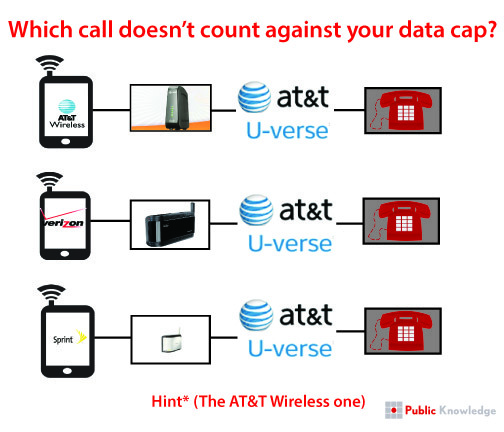
Net Neutrality imho is the deleterious treatment of competitive traffic, not the beneficial treatment of your own. As long as competitors can make the same deal, or continue to operate, Net Neutrality isn’t violated.
And how much traffic does cellular involve, well, with tethering and femtocells, I guess you can obtain unlimited?
Leveson failed to learn from credit crisis
The content of rule books, the sanctions available to regulators, and the composition of regulatory bodies are not trivial issues. But the principal reason both press and financial services regulation were lax is that political leaders wanted them to be lax.
In one case this is because they were intimidated by the perceived power of the press; in the other because they held an exaggerated view of the economic importance of the financial services industry and of the abilities of those who led it.
via ft.com
Regulation, guns and broadcasting come to mind. Also the precious movie industry.
For the attention of Piers Morgan: three reasons why conservatives oppose gun control
Piers provided a rare moment of insight when he recently admitted that banning assault weapons ???will not solve the gun crime problem in America??? ??? and he captured the myopic authoritarianism of his breed perfectly when he immediately added that Americans should do it anyway. Why? Because they can and they must. It???s the right thing to do. Better than that, it???s what the British would do.
NZ A Star Paying To Act In A Supporting Role
Mr Joyce offers an anecdote to illustrate his argument: in a visit to India last year, he found “everybody was talking about how massively beautiful New Zealand was”.
When he asked about this they told him, “Oh, these two Bollywood movies that were done in New Zealand, it’s just lifted the profile of New Zealand so magnificently in India.”
via stuff.co.nz
Joyce squirms all through this doughty defence of the dodgy, and if Key still believes there were votes in the Hobbit capitulations he’s not as in touch as he was.
As for the “anecdote,” how much did we pay Bollywood to bring NZ attention to India’s billion odd?
As for the movie industries special needs, because it provides special benefits, FFS.
The Internet: Who Built That?!
So Who Really Did Build the Assemblage which is the Internet? (Part 6)
The internet is translative boundary object for political thought, situated between four liberal ideologies about freedom and the state, corporation, individual, and the public. The internet is thus a parallax object, looking different from what ideological perspective one looks at it.
Its clear that Crovitz twisted his story to fit his technolibertarian agenda. Manjoo aligned his more accurate history of the internet in a technoprogressive defense of the president???s wickedly edited non-gaffe. McCracken used a most overused and unconvincing technoindividualistic argument to champion the great white men of internet history. Finally, Johnson put forth the most novel of the historiographical theories, introducing the idea that peer-production is behind the internet, or at least the operating systems that run the computers and apps that access the internet.
Little did they know.
 Hamish MacEwan