While the fact that Chorus are yet to release a cost strategy for non-standard UFB installations is indeed a problem, it is just one amongst a fair number.
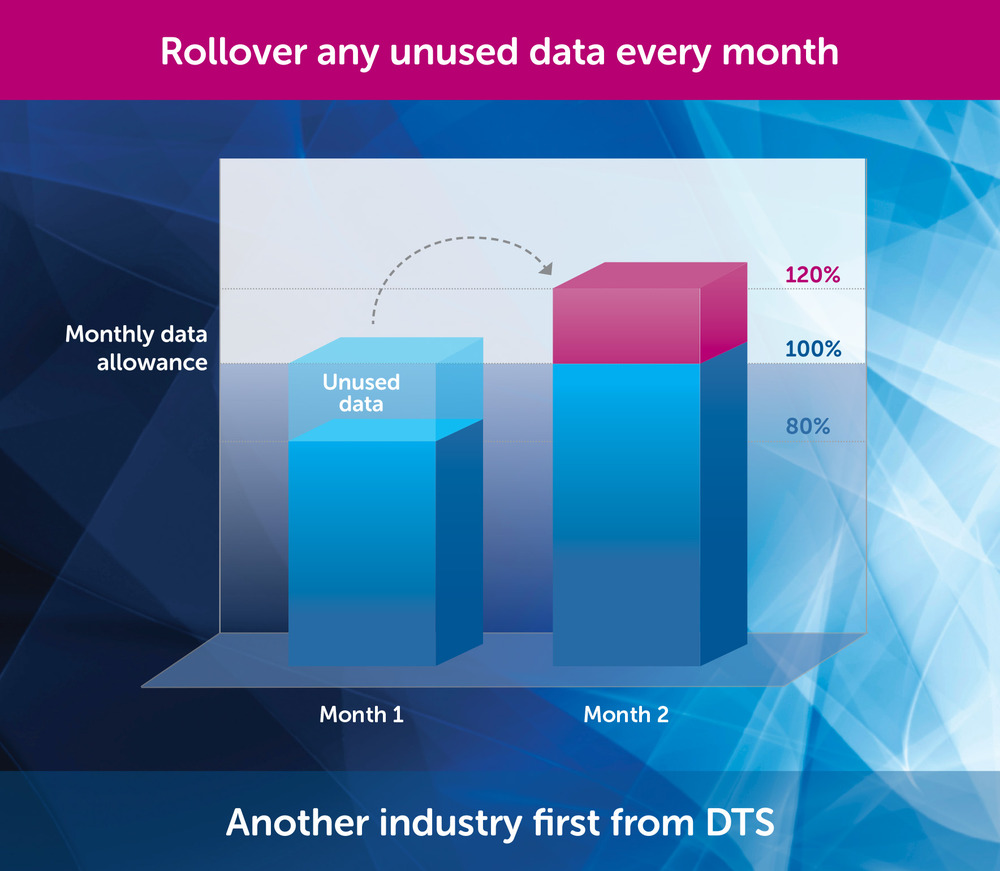
via dts.net.nz
While the fact that Chorus are yet to release a cost strategy for non-standard UFB installations is indeed a problem, it is just one amongst a fair number.
But ultimately Reed isn’t in this because he wants us to have better TVs or networked digital cameras. “Bad science is being used to make the oligarchic concentration of communications seem like a fact of the landscape.” Opening the spectrum to all citizens would, according to him, be an epochal step in replacing the “not” with an “and” in Richard Stallman’s famous phrase: “Free as in ‘free speech,’ not free as in ‘free beer.’ Says Reed: “We’ve gotten used to parceling out bits and talking about ‘bandwidth.’ Opening the spectrum would change all that.”
But surely there must be some limit. “Actually, there isn’t. Information isn’t like a physical thing that has to have an outer limit even if we don’t yet know what that limit is. Besides advances in compression, there’s some astounding research that suggests that the informational capacity of systems can actually increase with the number of users.” Reed is referring to work by researchers in the radio networking field, such as Tim Shepard and Greg Wornell of MIT, David Tse of UC-Berkeley, Jerry Foschini of Bell Labs, and many others, as well as work being carried out at MIT’s Media Lab. If this research fulfills its promise, it’s just one more way in which the metaphor of spectrum-as-resource fails and misdirects policy.
“The best science is often counterintuitive,” says Reed. “And bad science always leads to bad policy.”
Ironically, in selecting “colour” Reed has resonated with a situation where the State gave a limited colour monopoly, on Pantone 2685C, to Cadbury.
Further it was to prevent “interference” AKA “confusion of signal” by consumers (AKA receivers), etc. etc.
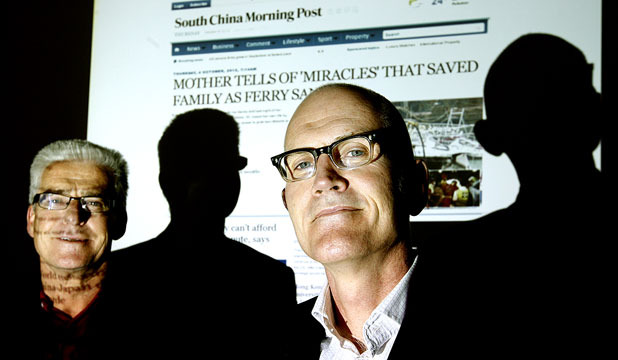
As the authors of the Invisible Gorilla say:
We all believe that we are capable of seeing what’s in front of us, of accurately remembering important events from our past, of understanding the limits of our knowledge, of properly determining cause and effect. But these intuitive beliefs are often mistaken ones that mask critically important limitations on our cognitive abilities. . . . As we go through life, we often act as though we know how our minds work and why we behave the way we do. It is surprising how often we really have no clue.
Intel demonstrated a prototype server for cutting the hardware cost of cellular base stations by swapping proprietary equipment for standard servers.
C-RAN is being co-developed with China Mobile. Intel demonstrated two SuperMicro servers running multiple base station software elements.
In the future, Intel and China Mobile hope to use undisclosed virtualisation methods to support up to 100 base stations in a single server.
However, when asked by a journalist from Computer Weekly whether Intel had been in talks with European telecommunications hardware suppliers about the technology, Rattner indicated it had had a frosty reception.
“Since you’re turning radio access networks from what was largely a hardware business into what will be a software business, you can understand why they’re relatively cool about it,” Rattner said. “System suppliers have been relatively cool.”
The explanation can be found in Clayton Christensen’s analysis of the innovator’s dilemma. Established companies in an industry are naturally resistant to disruptive innovation, which threatens their existing capabilities and cannibalises their existing products. A collection of all the businesses which might be transformed by disruptive innovation might at first sight appear to be a means of assembling the capabilities needed to manage change. In practice, it is a means of gathering together everyone who has an incentive to resist change.
The executives of music companies, film studios and book publishers did not rush to embrace the opportunities offered by new channels of distribution. They saw these technological developments as threats to well established business models in which they had large personal and corporate investments. And they were right to think this. So convergence was accomplished by groups such as Apple and Amazon, which had no similar vested interests to oppose change. These companies succeeded precisely because they were outsiders.
Economic growth is held back by industries where established interests are so powerful that disruptive innovation can be staved off for ever. Financial services is probably one. And education another. I think often of the contrast between the power of information technology to transform the process of learning, and the little progress that has been made towards actually doing so.
Buy an incumbent, become an incumbent.
Linux was the most prevalent operating system amongst the 10 most reliable hosting companies in September; seven of these sites were hosted on Linux servers, including www.qubenet.net and www.hosting4less.com, while two used FreeBSD and one used Windows Server 2008.
One in the top 10 at #10
No institution is more responsible for the recent explosion of patent litigation in the software industry, the rise of patent trolls, and the proliferation of patent thickets than the United States Court of Appeals for the Federal Circuit. The patent court’s thirtieth birthday this week is a good time to ask whether it was a mistake to give the nation’s most patent-friendly appeals court such broad authority over the patent system.
Further “Either way, breaking the Federal Circuit’s monopoly on patent appeals may be the single most important step we can take to fix the patent system.”
Is it surprising that a judicial monopoly over an intellectual monopoly should turn out poorly?

 Hamish MacEwan