Responding to Martin Geddes

There are lots of social values created by internet use that aren’t adequately “paid for” by individual internet subscribers, and aren’t appropriately appropriated by network owners.  Innovation is one of those positive spillovers that we don’t want to allow a single property owner to own forever, because the second innovator might do a better job with the idea.  Same thing online — the network owners shouldn’t necessarily be allowed to internalize all of these externalities, because we can’t assume that optimal social values will be the result.  Rewarding a single innovator isn’t always the best thing to do.

This was a poor excerpt to illustrate the title, it’s just such a good point I wanted to bring it out.  Benefits that don’t accrue to the operator, essential, the more the merrier.  Relates to monopoly generally, telco, copyright, patent et al.  A point that those dismissing Metcalfe’s Law overlooked, no the n^2 factor does not accrue to the operator, leaving value on the table makes renting seats at the table easier.

More selected Martin Geddes

The USPTO/DOC’s liberal and misleading definition of IP-Intensive industries is designed to influence policy debates

It turns out, the government has shamelessly ramped up the employment numbers by including a very liberal definition of IP-Intensive industries. To follow appreciate how liberal, it is useful to spend some time on Table 10, which is found on pages 36-38 of the report. Indeed, before you read the whole report, spend 10 minutes reading Table 10, and then things will begin to make more sense. More than 83 percent of all reported IP-Intensive jobs come from the trademark sector, where the mere existence of a brand name somewhere in the value chain makes the industry count as “ip-intensive.” Most of the jobs have nothing to do with anything remotely connected to ACTA, SOPA or other IP policy debates.

They exaggerate? Quelle suprise.

You Will Never Kill Piracy

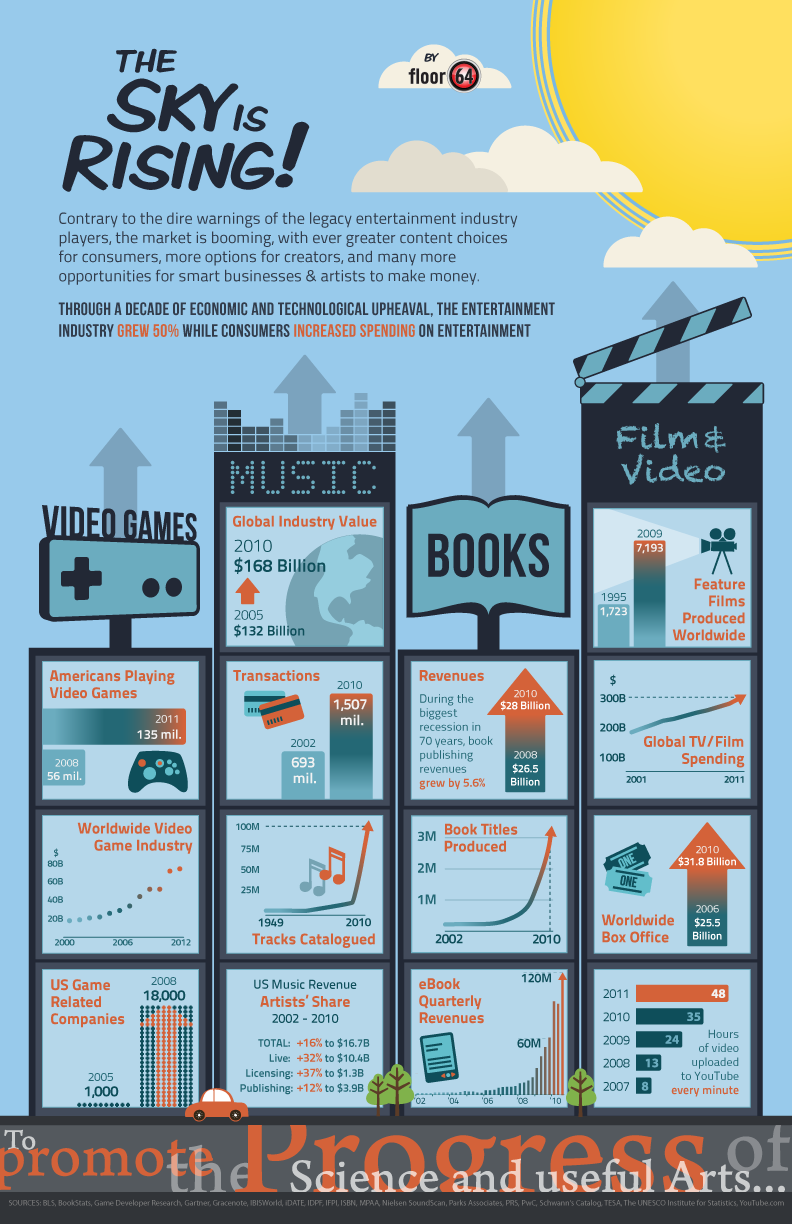
It isn’t about piracy – It’s about the Music Industry losing the ability to re-sell you the same music over, and over, and over. It’s about the Music Industry’s ever expanding back catalog no longer translating to automatic ever-expanding re-sales. The Music Industry spent a hell of a lot of money to make copyright effectively never-ending, explicitly to protect that re-selling revenue stream…and now the carpet has been yanked out from under them.

That huge drop in sales? That’s called market saturation. Most everyone that wanted a Beatles or Stones recording already owns it…on a format they will effectively never replace again.

It’s about the Music Industry thinking, wrongly, that they were in the business of selling toothpaste. Then waking up one day to realize they really are selling cast iron frying pans. You’ll always need to buy more toothpaste…but you’ll never need to buy another cast iron frying pan.


Meganomics: The Future of ???Follow-the-Money??? Copyright Enforcement

Addendum: Regarding the monetary harm of Megaupload???s activities, the Justice Department characterized it, without explanation, as ???well in excess of $500,000,000??? since 2006. And although that number is probably meant to impress, it???s somewhat baffling. Even without a per annum breakdown, it comes nowhere near the annual piracy losses claimed by the major industry groups???whether the BSA???s $58 billion loss claims for software losses in 2010 or the ???conservative??? $26 billion estimate for movie, music, and software piracy from 2007, which lazy journalists still allow to circulate. This for the site that MPAA called ???By all estimates??? the largest and most active criminally operated website targeting creative content in the world.???

Since we???re using made up numbers here, let???s make up some more???and for the sake of argument, some extremely favorable ones for the Justice Department???s effort to paint Megaupload as the big bad. Posit that all $500 million in losses came in 2011. Posit the $26 billion loss number. Megaupload???s contribution to the pirate economy tops out at 2%.

“meant to impress” with little other value.